Landscape and evolutionary dynamics of Helitron transposons in plant genomes as well as construction of online database HelDB

Why It’s Not Recommended to Use Personal or Business Email for Mass Mailing
2025-09-29
Nelumbo genome database, an integrative resource for gene expression and variants of Nelumbo nucifera
2026-02-25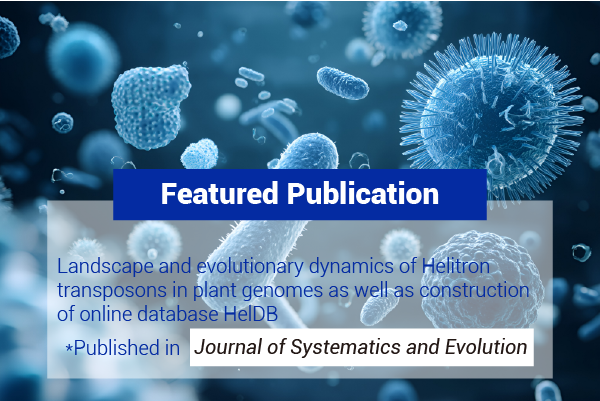
Helitron transposons contribute to host genome evolution by capturing genes and regulatory elements. In this study, we developed a pipeline to systematically identify and annotate Helitrons across 358 plant and 178 animal high-quality genomes. All data are stored in HelDB, a user-friendly database with a web interface and analytical tools. Our analysis shows that Helitron number and cumulative length positively correlate with genome size. In plants, Helitrons underwent two major expansions: the first ~20–30 million years ago, peaking around 24 Ma, and the second within the last 4 million years—possibly linked to paleogeographic changes. In Brassicaceae and Solanaceae, captured genes exhibit diverse functions, with metal ion binding consistently enriched. This may reflect the Rep domain’s requirement for divalent metal ions during transposition. This study advances our understanding of Helitron dynamics and provides a foundation for future functional research.
Related posts
2026-02-25

2026-02-25
2026-02-25